

The Death Doula
Why thinking about death brings us back to life

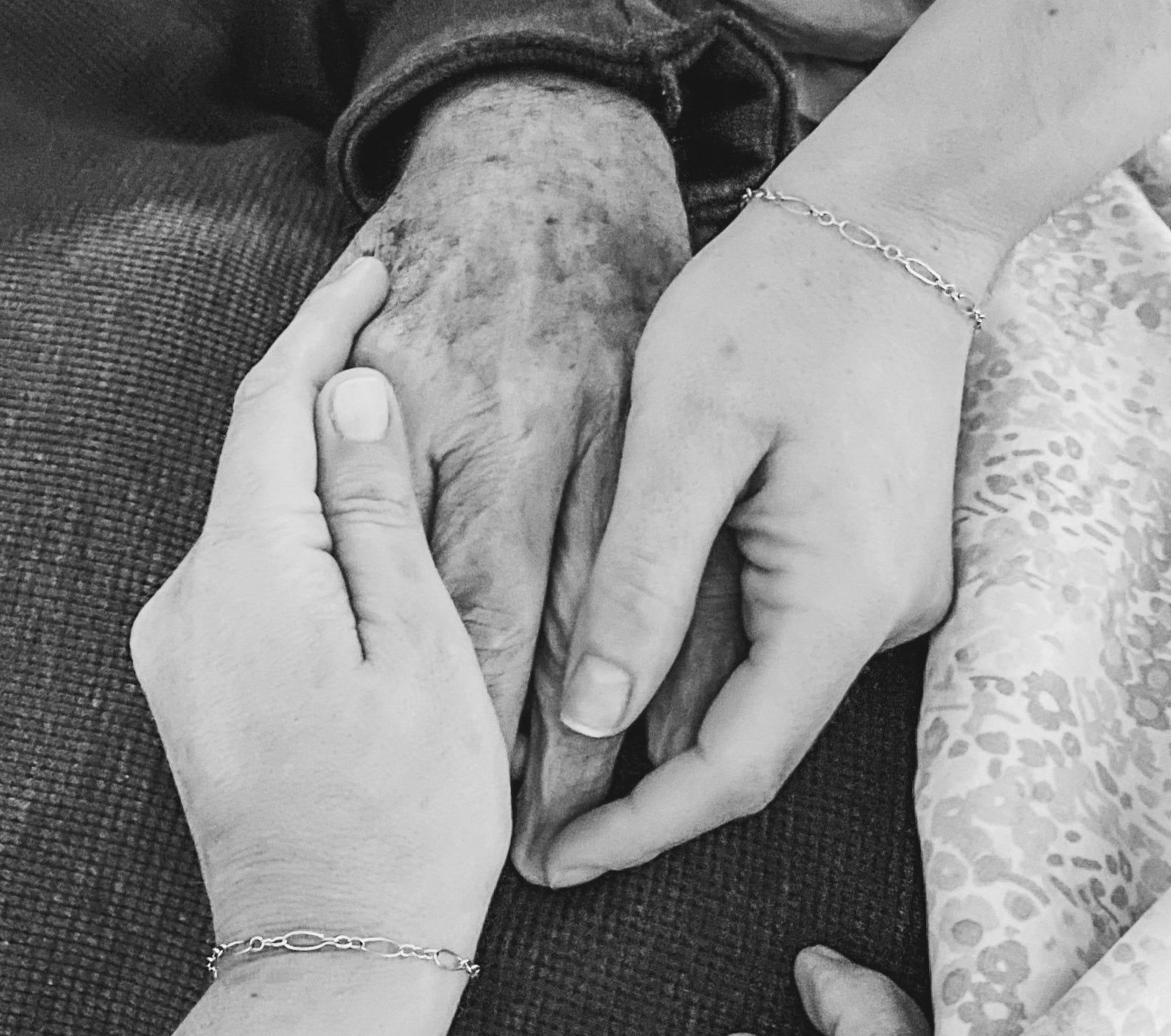
Humans put so much planning into birth. Welcoming a new person into this world is a lot of work. We have birth plans A, B, and C. We take Lamaze classes. We tour the hospitals to take our pick of the birthing suites; we have gender reveal parties, packed registries, and baby showers, often where other mothers can give the new ones advice about what is to come.
But we put almost no effort into planning our departure until it’s right around the corner or staring us in the face. Then, we whisper about aging parents. We panic when a coworker mentions hospice. We treat death like a contagious illness, removing it from our conversations, homes, and outsourcing it to sterile institutions, and guaranteeing we are ill-equipped when it finally arrives. I wonder what it would look like if we applied similar traditions to our deaths, too? For the past year, I have thought a lot about this contrast, a journey that started when I listened to an episode of the podcast, Everything Happens, by Kate Bowler. It was there that I first learned about the job of a death doula, and the concept immediately intrigued me. Let me preface this by saying, I am someone who has always been terrified of death. There have been times when I have woken in the middle of the night in a panic, and times when I’ve had to pull off to the side of the road to calm my body down. A tunnel vision and heaviness overcome me, my chest gets hot and tight, and I have to hold onto something tangible. Sometimes my headboard, or my steering wheel, or my husband. These occurrences are few and far between. There have been times in my life where they happen more often, like when I was going through my divorce, or when things are going eerily well. It’s funny: whether I’m content or not, there is still this lingering feeling of doom. That’s normal, right?
We meticulously plan for birth, yet we actively avoid planning for death. A denial that breeds the very anxiety we seek to escape. My own lifelong struggle with the fear of death, intensified by the recent passing of my father, has led me to this realization: the deepest source of life-affirming presence and intentionality is not found in distracting ourselves from our mortality, but in actively contemplating it.
I recently finished a book called The Comfort Crisis by Michael Easter, and in one chapter, he interviewed Buddhist monks from Bhutan. They explained that contemplating death was a part of their daily meditation (Easter, 2021). Their advice made sense. The monks contemplate death to help put daily annoyances into perspective, practice gratitude for the life they have, and let go of things they cannot control. Doing so relieves the body and mind of that anxious doom that empties us of presence. The genius of their daily practice is its consistency. It’s not a one-off traumatic confrontation; it’s daily calibration. This realization immediately connected with my father’s death and the intense wisdom of the death doula’s work.
My panic attacks are defined by the total loss of control. I look for an anchor when my body screams that my ultimate end is imminent. The death doula is the antidote to this cruel reminder. Their one job is to ensure the intentionality of the final moments. They create a death protocol, and that act of planning is profoundly appealing to someone whose greatest fear is the unpredictable void.
In essence, the modern death doula’s job is to re-humanize the dying process (Forbes Health, 2024). In a world where death is often clinical and isolated in a medical setting, the doula ensures that the end of life is recognized as a profound and deeply personal human experience, centered on comfort, connection, and meaning. The job of a modern death doula is to provide holistic, non-medical support to a person nearing the end of life, as well as to their family and loved ones. A death doula is laser-focused on the emotional, spiritual, and practical aspects of the dying process. A “death plan” isn’t about controlling the hour of death, but controlling the quality of the living that precedes it (INELDA, n.d.).
This intentionality extends directly to the family. Doulas are educators and guides, helping families anticipate the non-medical needs of the vigil. They help craft a Death Plan that details everything from the rotation of caregivers to the choice of music and scent in the room, ensuring the final moments are a reflection of the patient’s wishes, not a scramble driven by fear and anxiety. This deliberate planning prevents family arguments and ensures the patient’s agency is protected, even in their vulnerability (AARP, 2023).
Doulas are guardians of legacy and connection (INELDA, n.d.). They guide families through what they call Legacy Work, structured activities like creating memory boxes or recording the patient’s favorite stories in their voice. This turns the dying phase into a proactive opportunity to gather and cherish evidence of the life lived. The doula gives exhausted family members respite, allowing them to step out of the role of caregiver and simply be a daughter or a spouse, enabling true, meaningful presence in the face of loss.
Watching my father die peacefully in his living room, surrounded by family has made these ideas much more visceral and real, but also revealed what a beautiful death can look like, even though it is uncomfortable. The Bhutan monk’s advice feels timely. Contemplating death sets intention and forces my mind to seek meaning. I am writing to become the person I have always wanted to become, to share my ideas, to feel alive, to help me expand in ways I didn’t think possible. Because I owe it to my Dad, my family, and myself.
Our culture has outsourced death to the hospital, making it a clinical event rather than a communal, spiritual one. The death doula’s work is an act of resistance against the sterile, isolated norm. Doulas treat death as the final, important act of a meaningful life, not as a medical failure. They ensure that the eulogy virtues- love, connection, presence- are prioritized right up to the very end. That matters to me.
The contemplative life is a direct assault on the comfort we create to avoid these truths. As Holocaust survivor Corrie ten Boom noted, “If the devil can’t make you sin, he’ll make you busy” (ten Boom, 1974). The idea is that an overly full schedule or a life filled with hurry can cut off a person’s connection to their own well-being. I’ve discovered this is true in my inner life as well. Most of my day is overtaken by maladaptive daydreaming. I am constantly in my head, escaping the moment. The busy life is an external form of the daydreaming life. Both are highly effective ways to avoid the present and, crucially, avoid the big questions our ultimate death forces us to ask. Contemplating our mortality snaps the mind out of fantasy and into the reality of our limited time.
This practice, learned from the monks and modeled by the doula, creates a healthy sense of urgency. It forces a ruthless prioritization. What is most important to you? Who do you want to be? What have you always wanted to do? It is fodder and inspiration to move with intention now. Inspirational writer Nanea Hoffman captured this well in a widely shared Sweatpants & Coffee reflection: ”None of us are getting out of here alive, so please stop treating yourself like an afterthought. Eat the delicious food. Walk in the sunshine... Say the truth you’re carrying in your heart like hidden treasure. Be silly. Be kind. Be weird. There’s no time for anything else.”
No one wants to die with regret. I wonder what yours is? Contemplating death seems macabre. It’s not. It is an act of tough love that assigns value to living moments. It ensures we are living the eulogy virtues now, rather than just chasing resume achievements we can’t take with us. The only way out of the nihilistic despair, the “what is the point” mindset, is to declare the point through action, even if it feels hard at first (Hoffman, 2015).
Maybe it’s high time we all get over our pride and get on with living the life we have always wanted to live, because we only get this one, and time is precious. Make yourself uncomfortable now, so you can die comfortably and with joy later on. Please.
References
AARP. (2023). ‘Death doulas’ serve dying patients at home, in hospice. https://www.aarp.org/caregiving/home-care/end-of-life-doulas/
Bowler, K. (Host). (2023). Everything Happens [Audio podcast]. Everything Happens Initiative. https://katebowler.com/podcast
Easter, M. (2021). The comfort crisis: Embrace discomfort to reclaim your wild, happy, healthy self. Rodale Books.
Forbes Health. (2024). What is a death doula? https://www.forbes.com/health/healthy-aging/death-doula/
Hoffman, N. (2015). Sweatpants & Coffee.
https://sweatpantsandcoffee.com
International End-of-Life Doula Association (INELDA). (n.d.). What is an end-of-life doula? https://inelda.org/about-doulas/what-is-a-doula/
ten Boom, C. (1974). Clippings from my notebook. Fleming H. Revell Company.
Have you ever thought about end-of-life care in this way before? I’d love to hear your perspective.